Once dismissed as an evolutionary relic, the primary cilium is now recognized as the “antenna” of the cell. This hair-like, microtubule-based organelle serves as a critical signaling hub that detects and transmits extracellular cues into the cell. Its dysfunction leads to ciliopathies, a wide spectrum of human diseases. Strikingly, many ciliopathy patients show abnormalities in brain structure, yet the molecular roles of cilia in brain formation and function remain mysterious.
To make inroads, we combine techniques such as proximity labeling, quantitative proteomics, next-generation sequencing, super-resolution microscopy, and mouse genetics to probe ciliary function in the developing brain. Ultimately, we aim to understand how signaling errors in the cilium contribute to birth defects, pediatric tumors, and neurological disorders.
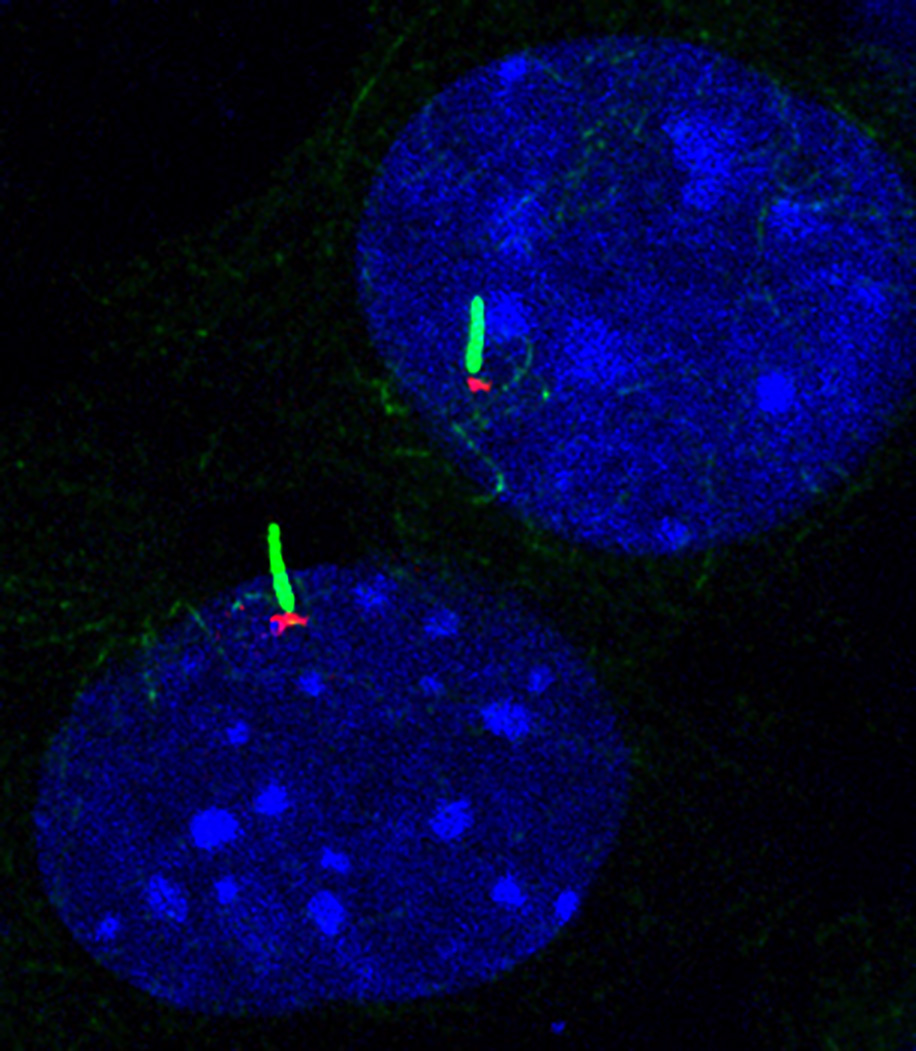
Identify bona fide ciliary proteins in distinct cell types
Ciliopathies are associated with dysfunction in nearly every organ of the human body, highlighting the versatile roles of the primary cilium. This functional diversity arises from the unique composition of signaling components within the cilia, combined with the distinct extracellular contexts. Therefore, we aim to identify the distinct signaling components present in cilia of different cell types. We have leveraged proximity labeling tools, TurboID and APEX2, to systematically chart bona fide ciliary proteins in various cell types and tissues. Our rigorous ciliary proteomic studies in cultured cells and transgenic mouse models have opened new avenues for understanding the molecular mechanisms of ciliary signaling and their roles in brain development.

Define roles of ciliary signaling in brain development and diseases
Building on the solid foundation of our ciliary proteomic results, we are investigating the unknown roles of primary cilia in the brain. Our current focus includes elucidating the mechanistic roles of the translation machinery and RNA-binding proteins in the cilia of neural progenitor cells. Many of these ciliary proteins are linked to neurological disorders, and our ultimate goal is to define the mechanistic functions of ciliary signaling in brain development and diseases.
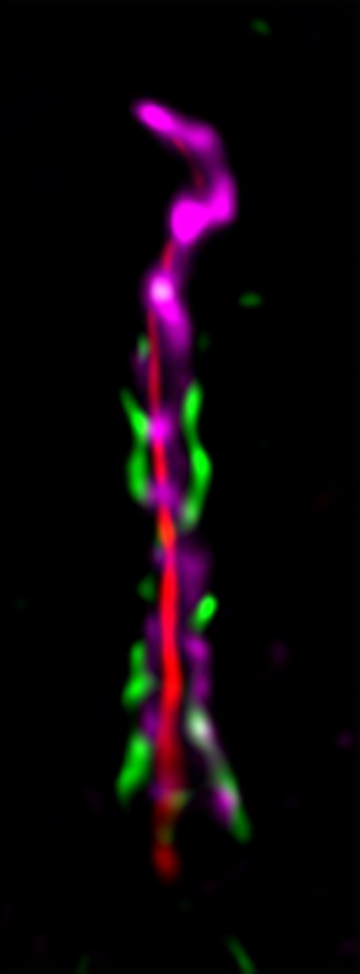
Elucidate signal transduction mechanism in the primary cilium
The primary cilium is essential for the transduction of many signaling pathways, including Hedgehog (Hh), Wnt, and PDGFRα, among others. The Hh pathway plays fundamental roles during embryonic development and in the maintenance of adult stem cells. Dysregulated Hh signaling leads to a variety of birth defects and tumorigenesis. But why, and how, does mammalian Hh signal transduction depend so critically on the primary cilium? To address this question, we integrate proximity-labeling–based quantitative proteomics, super-resolution imaging, and mouse genetics to uncover the molecular mechanisms underlying ciliary signaling. Our goal is to define how the primary cilium orchestrates signal transduction and to reveal how its dysfunction contributes to developmental disorders, including pediatric brain tumors and birth defects.
We are thankful for the following funding support:
